2nd Oct 2026
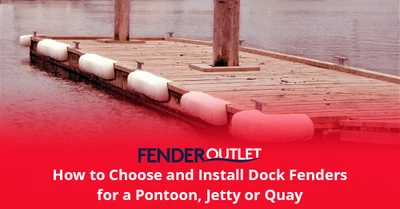
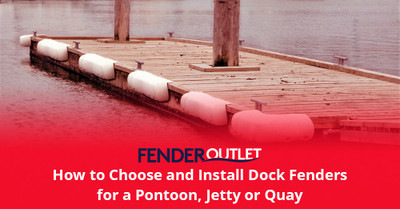
Choose dock fenders by the boat’s actual contact path, not simply the length of the pontoon. Identify where the bow, shoulder, midships and quarter can touch through the full tide and loading range, then select a profile that provides adequate stand-off without creating a snag, trip hazard or unsuitable load on the structure.
A fixed fender can protect a repeated contact point and reduce the need to position every portable fender perfectly. It does not replace correctly sized boat fenders, controlled approach speed or sound mooring lines. The best arrangement usually combines fixed protection at predictable berth hazards with mobile fenders on the vessel.
This guide explains how to assess a pontoon, jetty or quay and select from our dock fender range. Structural fixings and commercial or high-energy berths should be designed or checked by a competent professional.
Obtain permission before drilling or fixing anything. Marina pontoons, harbour walls, shared jetties and rented berths are not yours to alter without written approval. The operator may specify approved products, fixing zones, corrosion-resistant hardware and maximum projections.
Contents
- Key facts at a glance
- Dock fenders vs boat fenders: what is each for?
- How do you survey the berth before buying?
- Which type of dock fender should you choose?
- Where should dock fenders be placed?
- How do tide and water level affect installation?
- How should dock fenders be fixed?
- How do you test the completed system?
- How should fixed dock fenders be maintained?
- Common dock-fender mistakes
- Information to collect before ordering
- Frequently asked questions
- Technical references
Key facts at a glance
- Map the boat’s movement and contact points at high and low water, different loading and expected wind directions.
- Use fixed fendering to protect repeatable hazards such as pontoon edges, corners, piles and berth entrances.
- Keep portable fenders aboard for the boat’s changing contact points and for other destinations.
- Select profile and projection according to stand-off, hull shape, contact angle and available mounting face.
- The supporting pontoon or wall and every fixing must be capable of carrying the expected load.
- Avoid projections, bolts, rope loops and edges that can catch the hull, lines, clothing or feet.
- Allow for tide, pontoon movement, squat, crew and fuel loading so the protected height remains effective.
- Inspect fixed fenders after storms, impacts, freeze/thaw, UV exposure and structural maintenance.
- Do not use old tyres or improvised materials without permission and a proper assessment of marking, pollution, trapping and fixing risk.
Compare fixed berth protection
Choose from profiles and shapes intended for pontoon, dock and jetty contact rather than improvising with unsuitable material.
Dock fenders vs boat fenders: what is each for?
| Feature | Fixed dock fender | Portable boat fender |
|---|---|---|
| Attachment | Installed on pontoon, jetty, pile or wall | Carried and suspended from the boat |
| Best use | Repeatable berth hazards and known contact zones | Changing berths, rafting, locks and hull-specific placement |
| Height control | Fixed to a level or mounted vertically | Adjusted by fender line for each situation |
| Responsibility | Usually berth owner/operator permission and maintenance | Boat owner’s equipment and positioning |
| Coverage | Only protects where installed | Moves with the boat but can ride up or escape |
| Main limitation | Cannot follow every tide/hull geometry unless designed for it | Requires crew preparation and suitable attachment points |
| Best strategy | Part of a combined berth system | Part of a combined berth system |
A fixed bumper at a pontoon corner may prevent a predictable knock during entry, while cylindrical fenders on the boat protect the long side once alongside. A larger round fender may still be needed near the bow or quarter where the geometry changes.
How do you survey the berth before buying?
- Obtain the operator’s requirements. Confirm ownership, permissions, approved fixing method and any navigation or accessibility restrictions.
- Record the structure. Note timber, concrete, steel, composite or inflatable material; dimensions; condition; internal services; and safe fixing zones.
- Observe the boat through a full range. Check high and low water, normal and light loading, wind from both sides and wash from passing traffic.
- Mark actual contact points. Chalk, removable tape or photographs can show where scuffs and impacts occur without guessing.
- Measure vertical variation. A fixed quay and tidal boat may need long vertical protection, while a floating pontoon moves with the boat.
- Identify approach hazards. Corners, cleats, pile guides, bolt heads and narrow entrances often need targeted protection.
- Assess the hull. Freeboard, flare, tumblehome, rubbing strake, windows and topside fittings affect contact.
- Consider other users. The installation must not narrow a walkway, obstruct rescue access, catch wheelchairs or create a mooring-line trap.
- Estimate consequence and load. Larger/heavier boats, exposed berths and frequent commercial contact require professional design rather than a light leisure bumper.
Photograph the berth at several water levels and with the boat both fully and lightly loaded. A single midday photograph can hide the vertical range that makes a short fender ineffective.
Which type of dock fender should you choose?
| Type or form | Typical strength | Best suited to | Watch for |
|---|---|---|---|
| Straight profile or strip | Continuous protection along an edge or face | Pontoon sides, landing stages and predictable parallel contact | Joints, mounting screws and insufficient projection for flared hulls |
| D-shaped or hollow profile | Resilient stand-off with a broad contact face | Timber or rigid mounting faces where moderate compression is needed | Correct orientation, end finishing and fixing spacing |
| Corner fender | Covers a vulnerable outer or inner corner | Berth entrances, pontoon ends and sharp changes of direction | Boat may contact above/below the protected corner through tide |
| Wheel/roller system | Can guide the boat around a corner while reducing sliding friction | Narrow entrances or frequent controlled corner contact | Bearings, projection, trapping and structural loads require careful installation |
| Flat pad or bumper | Protects a local impact patch | Posts, transoms against a berth or isolated fittings | Too small an area can miss the hull as it moves |
| Vertical fender | Covers a wide water-level range | Fixed quays, piles and tidal walls | Need adequate length, lower-end control and abrasion resistance |
| Portable fender secured to berth | Flexible temporary protection | Short-term or permission-limited arrangements | Rope chafe, theft, height change and product suitability for continuous rubbing |
Product names do not replace dimensions. Compare overall depth, compressible depth, width, length, fixing flange and the manufacturer’s mounting instructions. A visually substantial strip may still project less than the rubbing strake or hull curve requires.
Where should dock fenders be placed?
1. The first contact point on approach
Protect the edge or corner that the bow or shoulder can touch during a normal controlled arrival. Do not encourage the skipper to drive against it; the fender is backup for low residual contact.
2. The main alongside contact zone
Provide sufficient length where the hull lies most consistently. Gaps between short sections should not align with the widest or most vulnerable part of the boat.
3. High-load bow and quarter areas
Hull curvature can concentrate pressure on a small patch. Additional depth or a different profile may be needed rather than simply extending a thin strip.
4. Piles and structural projections
A pile can become the dominant contact point as the boat surges. Vertical protection or a separate system may be needed through the tide.
5. Cleats and hardware
Fixed fendering should not obstruct cleat use or create a sharp edge around which a line bends. Move or redesign the fender rather than compromising safe mooring leads.
6. Walkway and access edges
Keep the top surface free of projections and trip hazards. Consider boarding points, ladders, rescue equipment, power/water pedestals and mobility access.
How do tide and water level affect installation?
A floating pontoon generally rises and falls with the boat, making a horizontal side profile practical. A fixed quay, wall or pile creates a much larger vertical change. The boat can also sit lower when fuel, water, stores or crew are added, while wind and wash alter heel and roll.
| Berth condition | Main issue | Possible design response |
|---|---|---|
| Floating finger pontoon | Boat and berth move together but roll and freeboard still change | Horizontal profile at observed contact height plus portable fenders |
| Fixed tidal wall | Contact height moves significantly | Long vertical fenders, fender board arrangement or professionally designed wall system |
| Pile berth | Boat surges against a narrow vertical structure | Vertical pile protection and mooring control over the full tide |
| Drying berth | Hull attitude and contact can change as it settles | Specialist local assessment; do not assume floating-state fendering remains effective |
| Variable boat users | Different hulls contact at different heights | Broader vertical coverage and clear maximum vessel limitations |
| Exposed berth | Compression and movement exceed calm-water assumptions | Larger engineered protection plus review of mooring geometry and berth suitability |
How should dock fenders be fixed?
Follow the exact manufacturer’s fixing diagram and the berth owner’s specification. The fender may use a flange, internal channel, through-bolt, backing plate or proprietary bracket. Fasteners must suit the structural material and marine exposure without creating an incompatible-metal corrosion problem.
- Locate hidden electrical cables, water pipes, structural reinforcement and moving pontoon parts before drilling.
- Use the specified number, diameter and spacing of fasteners.
- Provide backing or load spreading where the substrate alone is not adequate.
- Use corrosion-resistant, compatible hardware and isolate dissimilar metals where the design requires it.
- Recess or cover heads only as instructed; no sharp metal should face the boat.
- Do not stretch a profile so tightly that it cannot compress or contracts away from fixings in cold weather.
- Finish ends so they cannot catch ropes, clothing or the hull.
- Seal penetrations in timber or composite structures with a method approved by the owner and material supplier.
- Torque and inspect fasteners as specified; overtightening can crush a hollow profile or substrate.
- Use a marine contractor when the load, structure or access is uncertain.
Installation details are product- and structure-specific. This article cannot provide a universal bolt size or spacing. Incorrect fixings can fail suddenly, damage the pontoon or leave dangerous metal exposed.
How do you test the completed system?
- Inspect every edge and fixing by hand for sharpness, snagging and movement.
- Check that the fender cannot obstruct walking, boarding, rescue access or utility services.
- Bring the boat alongside slowly with crew observing—not standing in a pinch point.
- Confirm the hull contacts the intended resilient face rather than a bolt, joint or adjacent structure.
- Observe the boat at different loading and water levels.
- Check that portable fenders still sit correctly and are not squeezed above the fixed profile.
- Inspect the supporting structure after initial contact for cracking, pull-out or distortion.
- Photograph the normal setup and record the installation date and hardware used.
How should fixed dock fenders be maintained?
| Inspection item | Normal check | Replace or obtain advice when |
|---|---|---|
| Fender face | Clean, resilient and free of deep cuts | Split, hardened, permanently crushed or exposing reinforcement/hardware |
| Fixings | Tight, corrosion controlled and seated correctly | Loose, bent, missing, cracked substrate or repeated movement |
| Joints and ends | Flush and unable to catch hull/line | Gaps, lifted edges or sharp exposed sections |
| Supporting structure | No rot, cracking, delamination or deformation | Any structural deterioration appears |
| Height and coverage | Boat continues to meet protected zone | New boat/loading/tide pattern bypasses fender |
| Walkway safety | No trip, snag or access hazard | Projection or movement creates a hazard |
| Surface contamination | No grit, metal or chemicals likely to mark hull | Persistent contamination cannot be cleaned safely |
Inspect after a known impact, severe weather or pontoon maintenance, not just at an annual interval. Fixed fenders are easy to stop noticing because they remain in place.
Keep portable protection aboard
Even a well-fendered home berth cannot protect the boat at a visitor pontoon, fuel berth, lock or raft.
Common dock-fender mistakes
- Buying by pontoon length without observing where the hull touches.
- Installing a shallow strip below a flared hull or rubbing strake.
- Protecting the middle while leaving the approach corner exposed.
- Drilling a marina structure without written permission.
- Using too few or unsuitable fasteners for the substrate.
- Leaving bolt heads, sharp ends or cut profiles facing the boat.
- Creating a trip hazard or reducing accessible walkway width.
- Assuming fixed fenders remove the need for mooring springs and boat fenders.
- Ignoring tide and loading changes.
- Failing to inspect the hidden structure behind the fender after impacts.
Information to collect before ordering
- Written permission and installation rules
- Pontoon/jetty/quay material and structural condition
- Available mounting-face height and depth
- Length of each actual contact zone
- Boat length, beam, displacement and freeboard
- Rubbing-strake position and hull flare
- High- and low-water contact levels
- Normal and light/heavy loading levels
- Approach direction and corner hazards
- Maximum acceptable projection into water or walkway
- Required fixing type and backing access
- Exposure to UV, oil, fuel, ice, grit and wash
- Maintenance access and inspection responsibility
Frequently asked questions
Do I still need boat fenders if the pontoon has dock fenders?
Yes. Fixed fenders only protect their installed positions, while portable fenders protect the boat at other berths and help cover changing hull contact points.
Can I screw dock fenders into a marina pontoon?
Only with the marina or owner’s written approval and an installation method suitable for the structure. Pontoons may contain services or proprietary structural components.
How high should dock fenders be fitted?
At the observed hull contact height through the relevant water and loading range. Fixed quays may need vertical coverage; a single universal height is not reliable.
Are corner fenders enough for a berth?
They protect a corner, not the entire alongside zone. Use them as part of a system with side protection, portable fenders and suitable mooring control.
Can I use ordinary boat fenders permanently on a dock?
Some owners temporarily secure portable fenders to a berth, but check permission, product suitability, rope chafe, theft risk and changing height. A purpose-designed fixed system is generally more predictable.
What is the best dock fender for a tidal wall?
A long vertical or engineered wall system may be needed because contact height changes significantly. Obtain local professional advice for wall structure, loads and vessel range.
How far should a dock fender project?
Far enough to keep every vulnerable hull feature clear under compression, without creating a navigation or access hazard. Use measured hull geometry and product compression data.
Who should install dock fenders?
Competent DIY installation may be appropriate on a privately owned light-duty timber berth with approved instructions. Structural, shared, commercial, concrete, steel or exposed installations should be handled or checked by a suitable marine contractor or engineer.
Technical references
Manufacturer specifications, product instructions and local berth conditions always take priority over generic guidance. Check the instructions supplied with the exact fender, buoy, holder or fitting before use.